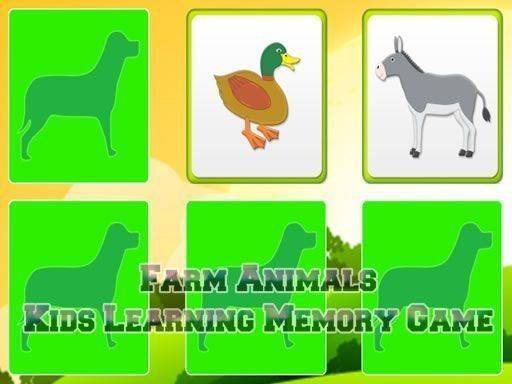
This matching game excels at creating a relaxed learning environment. The farm animal illustrations are charming and the audio cues add a layer of engagement without being overwhelming. The simple tap-to-flip interface is perfect for small hands, allowing independent play. It is an excellent tool for parents seeking to support their child's memory development in a fun, pressure-free way. The optional difficulty levels add longevity, making it a worthwhile addition to any preschooler's digital library.
This game centers on a classic tile-flipping exercise where children locate identical animal illustrations. Each turn involves selecting a card, viewing the image, and recalling its position for future matches. This process naturally strengthens short-term memory and attention to detail. The farm theme adds a layer of familiarity, as animals like cows, pigs, and chickens appear throughout. The activity is designed to be gentle, with no timers or penalties, allowing each child to progress at their own pace. Such an approach supports early cognitive development by encouraging pattern recognition and recall in a low-stress setting.
The interface uses bright, friendly colors and simple shapes that appeal to young audiences. Each card flip triggers a soft animal sound, reinforcing the connection between the image and the creature it represents. This audio feedback helps maintain engagement without being distracting. The overall aesthetic is clean and uncluttered, ensuring that children can focus on the task without visual overload. The cheerful farm backdrop adds context and warmth, making the experience feel like a playful exploration rather than a formal lesson.
The game requires only a tap or click to flip cards, making it accessible for toddlers and preschoolers. There are no complex menus or instructions to navigate. The straightforward interaction means that even very young players can participate with minimal guidance. This design choice reduces frustration and promotes independent play. Caregivers can easily join in by naming animals or encouraging the child, but the game remains fully functional for solo sessions. The simplicity of the controls ensures that the focus stays on the matching challenge rather than on mastering the interface.
Some versions of this game may offer multiple difficulty levels or additional sets of animal cards to maintain interest over time. As children become more confident with basic matching, they can explore larger grids or new themes. This gradual increase in complexity helps sustain engagement without overwhelming the player. The core mechanic remains consistent, but the variety in content prevents the activity from becoming repetitive. Such options allow the game to grow with the child, providing a longer-lasting educational tool.







Comments
0 comments