Reactive Path Puzzle Runner
Review
Reactive Path Puzzle Runner stands out with its adaptive AI that learns from your path and rearranges obstacles accordingly. The room designs are varied, and the endless format keeps you coming back. Controls are tight, and the lack of saves or scores means each session is a pure test of reflexes and strategy. It is a well-crafted puzzle platformer that respects your time and rewards practice.
About This Game
Core Gameplay Loop
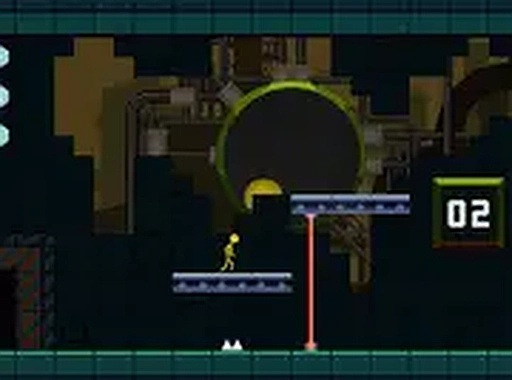
In Reactive Path Puzzle Runner, you control a character through a series of warehouse-style rooms. The twist: a security system observes your every move. After you complete a room, the system places new barriers along the route you just took. This means your own actions shape the next challenge. The game rewards careful observation and quick adjustments. Each run feels unique because the obstacles are a direct response to your previous decisions.
Room Design & Progression
Each room features a different layout, with platforms, gaps, and walls arranged to test your spatial awareness. The game does not follow a fixed level order. Instead, the sequence of rooms is endless, and the difficulty scales as the system learns your habits. Some rooms may require precise jumps, while others demand careful path planning. The variety keeps the experience fresh and encourages multiple attempts.
Controls & Responsiveness
The game is designed for desktop use with a keyboard or mouse. Movement and jumping are responsive, allowing for quick corrections. The interface is minimal, so you can focus on the action. Full screen mode is available for a more immersive experience. The controls are simple to learn, but mastering them under the pressure of an adapting system takes practice.
Replay Value & Skill Growth
Because the security system tailors obstacles to your previous path, no two play sessions are identical. This design naturally encourages repeated play. Over time, you develop better reflexes and a deeper understanding of how the system reacts. The short game loop means you can complete several runs in a single sitting, making it easy to track improvement. The endless format ensures there is always a new challenge waiting.








Comments
0 comments