Luminous Cube Star Chase
Review
Luminous Cube Star Chase stands out for its elegant simplicity. The core mechanic of guiding a cube past rotating obstacles to collect stars is immediately intuitive, yet the escalating complexity keeps each session engaging. The visual clarity and responsive controls make it easy to pick up for a few minutes, while the score-chasing element encourages longer play. It is a well-executed example of how a straightforward concept can provide lasting entertainment without unnecessary complexity.
About This Game
Core Gameplay Loop
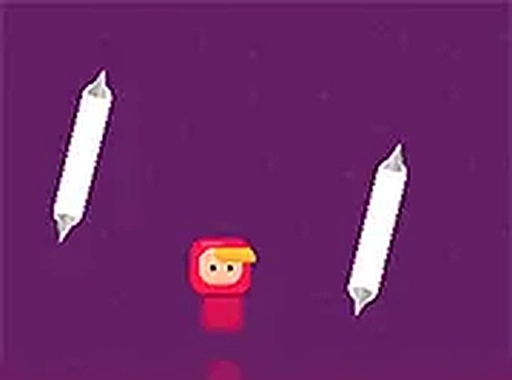
Players take command of a small, bright cube that moves across a grid-like playing field. The primary objective involves reaching and collecting luminous star tokens that appear at various positions on the board. Between the cube and these targets, spinning spherical barriers rotate in predictable patterns, creating a dynamic path that shifts with each attempt. Success depends on observing these movement cycles and choosing the right moment to advance.
Obstacle Design & Variety
The floating spheres that populate each stage rotate at different speeds and along different axes. Some spin horizontally, while others rotate vertically, and later stages introduce spheres that change their rotation direction after a set number of turns. This variety keeps the challenge fresh and encourages players to develop new strategies for each configuration. The game does not introduce new elements arbitrarily; instead, it layers complexity by combining existing obstacle types in novel arrangements.
Scoring & Progression
Each star collected adds points to the player's total score. The game tracks the highest score achieved during a session, allowing players to measure their improvement over time. There is no fixed endpoint; the experience continues as long as the player successfully avoids obstacles and collects stars. This open-ended structure suits short play sessions and longer attempts alike.
Visual Style & Accessibility
The visual presentation uses bright, saturated colors with clear contrast between the player cube, the stars, and the obstacles. This design choice ensures that players can quickly identify each element at a glance, which is essential for making split-second decisions. The interface remains uncluttered, with score and progress indicators placed at the edges of the screen. No reading is required to understand the core mechanics, making the game accessible to players of all language backgrounds.
Cross-Device Compatibility
The game runs entirely within a web browser and requires no installation or plugin. It responds to both mouse clicks and touch inputs, adapting to the device being used. On desktop, players click to move the cube; on mobile devices, tapping the screen serves the same function. The layout scales to fit different screen sizes without losing functionality or visual clarity.



Comments
0 comments