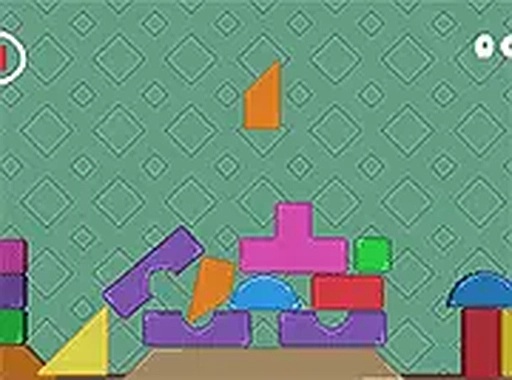
Timber Stack: Equilibrium Challenge turns a simple concept into an engaging test of steady hands. The physics are convincing, with each block wobbling and settling in a way that feels natural. The lack of timers or penalties creates a relaxing atmosphere, perfect for unwinding. The visual design is clean and pleasant, supporting the focused gameplay. While the core loop is straightforward, the gradual increase in difficulty as the tower grows keeps each attempt fresh. It is an excellent choice for players of all ages who enjoy thoughtful, low-pressure puzzles.
At its heart, this game is about precision and patience. A single block swings back and forth at the top of the screen. Your task is to drop it onto the growing stack below. The block is not rigid; it wobbles slightly as it lands, adding a layer of unpredictability. This means that even a perfectly centered drop can shift, forcing you to adapt. The physics engine treats each piece with realistic weight and friction, so the tower behaves like a real pile of wooden planks. This simple setup creates a surprisingly deep challenge where each placement matters.
The game presents a clean, friendly visual design. Blocks have a natural wood grain texture, and the background is soft and unobtrusive. A small balloon floats above, serving as a distant goal rather than a strict objective. The color palette is warm and inviting, with gentle shadows that give the blocks a tangible feel. There are no distracting animations or loud effects. This calm aesthetic helps players focus on the task at hand, making the experience feel more like a mindful activity than a frantic race.
As the tower grows taller, the challenge naturally increases. Higher stacks become more unstable, and the swing speed of the block may change. There is no set number of levels; each attempt is a fresh start. This structure encourages repeated play as you try to beat your own record height. The game tracks your best performance, giving you a clear target to improve upon. The lack of a fixed endpoint means the game can be enjoyed in short bursts or longer sessions, always offering a new puzzle to solve.
The controls are intentionally minimal. A single tap or click drops the block at its current position. There are no complex menus or settings to adjust. This makes the game instantly accessible to young children and adults who prefer straightforward interactions. A full-screen mode is available for a more immersive view. The simple control scheme does not reduce the depth of the gameplay; instead, it highlights the core skill of timing and spatial awareness. Anyone can pick it up and understand the goal within seconds.
For children, this game offers a gentle introduction to concepts of balance, gravity, and cause-and-effect. Watching a block wobble and settle teaches about stability and center of mass. The trial-and-error nature of the game encourages problem-solving without frustration. Since there is no time limit or penalty for failure, kids can experiment freely. This makes it a suitable tool for developing fine motor control and patience. Parents can feel confident that the content is entirely safe and constructive.







Comments
0 comments